
The wind has finally died down. The rain has stopped pounding against the roof, and the immediate sense of danger has passed. For many homeowners, the hours following a severe storm bring a collective sigh of relief as they assume the worst is over, unaware that early signs of water intrusion may already be developing.
However, a silent threat often lingers long after the clouds have cleared. While a storm might last a few hours, the water intrusion it leaves behind can cause problems that last for months. Moisture that slips through cracked shingles, broken window seals, or flooded basements begins to work immediately, attacking the structural integrity of your home.
More concerning than the water itself is what comes next: mold. It doesn’t take weeks for microbial growth to begin. In the right conditions, mold can establish a foothold in as little as 24 to 48 hours. Identifying signs of water intrusion immediately is not just about drying out a carpet; it is about preserving the health of your home and your family.

The Race Against the Clock
Water damage is deceptive. A small puddle on the floor might seem manageable with a few towels, but visible water is often just a symptom of a larger issue. When water intrusion enters a structure, it migrates. It seeps into drywall, soaks into insulation, and wicks up into wooden framing.
Once moisture penetrates these porous materials, the environment becomes a breeding ground for mold. Mold spores are naturally present in the air, but they require moisture and an organic food source—like the paper facing on drywall or the wood in your subfloor—to colonize.
Quick action is your only defense. The “wait and see” approach often leads to secondary damage. Wood begins to rot, drywall loses its structural integrity, and that distinct, musty odor begins to permeate the house. Professional restoration services emphasize rapid drying for this reason. The goal is to halt the absorption of water before it causes irreversible damage or widespread mold contamination.
Your Post-Storm Inspection Checklist
As soon as it is safe to move around your property, you need to conduct a thorough inspection. Do not rely on a cursory glance. Water follows the path of least resistance, which often means it ends up in places you wouldn’t immediately suspect.
Look Up: Ceilings and Upper Walls
Start your inspection at the top. If shingles were damaged or flashing was compromised, the attic is the first place water will accumulate. However, you might not see the leak until it bleeds through the ceiling below.
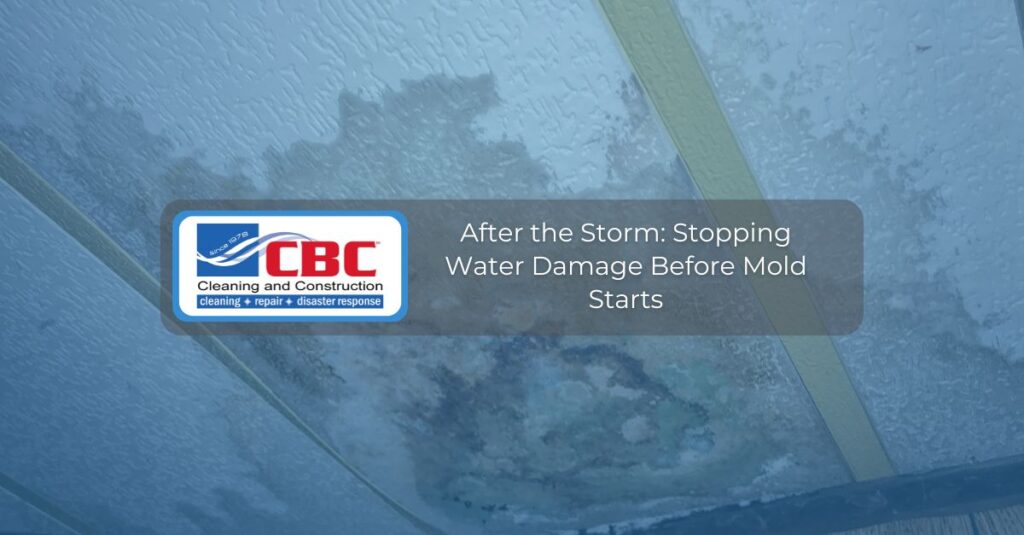
Look for discoloration. Yellow, brown, or copper-colored rings on the ceiling are telltale signs of active leaks. Pay close attention to corners where walls meet ceilings, as water often travels along beams and settles in these joints. If you see paint that is bubbling or peeling, do not ignore it. This usually indicates that water is pooling behind the paint layer.
Inspect the Perimeter: Windows and Doors
Wind-driven rain can be incredibly forceful. It pushes moisture into the smallest gaps around window frames and door jambs. Check the sills for standing water. Run your hand along the drywall around the window. It should feel dry and room temperature. If it feels cool or damp to the touch, the seal has likely failed.
Don’t forget to check the floor immediately in front of exterior doors. If the weatherstripping is old or worn, water may have seeped underneath the threshold and into the subfloor.
Look Down: Floors and Baseboards
Gravity pulls water downward, eventually settling it in your flooring. With hardwood floors, damage often manifests as “cupping,” where the edges of the planks rise higher than the center, or “crowning,” where the center is higher than the edges — both potential signs of hidden water intrusion you may not notice right away.
For carpeted areas, use your sense of touch. Walk around the perimeter of the room in your socks. If you feel dampness, lift the corner of the carpet if possible. The padding underneath acts like a sponge and can hold water for days, even if the surface fibers feel relatively dry.
Check your baseboards as well. If they look swollen or are pulling away from the wall, it is highly likely that water is wicking up from the floor or down from inside the wall cavity.
The Vulnerable Zones: Basements and Crawlspaces
Basements are notoriously susceptible to post-storm damage. Even if you don’t have a history of flooding, hydrostatic pressure from oversaturated ground soil can push water through foundation cracks.
Inspect the walls for damp spots or trickling water. Check the operation of your sump pump immediately. If the power went out during the storm, the pump may have failed, leading to a rising water table under your foundation. In crawlspaces, look for standing water on the vapor barrier or hanging insulation that looks heavy and wet.
When to Call a Professional
There is a distinct difference between a minor spill and structural water damage. You might be tempted to handle the cleanup yourself to save money, but DIY restoration can sometimes be costlier in the long run if hidden moisture is left behind.
If you are dealing with a small amount of clean rainwater on a tile floor, a mop and a dehumidifier might suffice. However, you should call a professional restoration crew if:
- The water source is unclean: If the water contains sewage, mud, or chemical runoff, it is a biohazard. Do not attempt to clean this yourself.
- Deep saturation occurred: If carpet padding, insulation, or drywall is soaked, surface drying will not work. Professional equipment is needed to extract water and dry the structure from the inside out.
- You see mold: If you already see mold growth, disturbing it without proper containment can spread spores throughout the rest of your home.
- The affected area is large: Extensive damage requires a large crew to mitigate quickly before rot sets in.
The CBC First Advantage
When you are staring at water damage, the logistics of cleanup can feel overwhelming. This is where CBC First steps in. We don’t just extract water; we help you navigate the chaos of the recovery process.
Our team works closely with you and your insurance company to ensure the claim is handled correctly. Insurance paperwork can be dense and confusing, but having a knowledgeable and qualified professional on your side changes the dynamic. We advocate for the necessary repairs to return your home to its pre-loss state. We understand the science of drying and the urgency of the situation, ensuring that hidden moisture doesn’t turn into a future mold nightmare.
Restoring Your Home and Peace of Mind
The days following a storm should be spent recovering, not worrying about the long-term health of your home. By conducting a thorough inspection and acting fast, you can stop water damage in its tracks.
Remember that moisture is patient. It will sit in your walls and floors, waiting to cause problems, unless you forcefully remove it. If your inspection reveals damp walls, squishy carpets, or suspicious stains, do not hesitate. The window to prevent mold is closing.
Secure your investment and protect your family’s health. If you suspect water intrusion, contact CBC First today. Let us handle the restoration so you can get back to normal life.